Cart

Pendidikan

BRIDGING THEORY AND PRACTICE IN LANGUAGE ASSESSMENT FOR EFL TEACHERS

BRIDGING THEORY AND PRACTICE IN LANGUAGE ASSESSMENT FOR EFL TEACHERS

Language assessment is often perceived by preservice teachers as one of the most intimidating aspects of education, frequently treated as a detached technical requirement rather than a vital spark for learning. This comprehensive guide transforms that perception by offering a clear, practice-oriented pathway through the complexities of evaluating language proficiency in EFL contexts. Grounded in established theories but driven by a hands-on, project-based learning approach, this book empowers educators to move beyond traditional testing. It provides a deep dive into core principles: validity, reliability, and authenticity, and demonstrates their direct application in assessing receptive and productive skills. From constructing effective multiple-choice items and designing nuanced analytical rubrics to conducting expert validation and basic item analysis, readers are guided through every stage of the assessment cycle. Designed specifically for undergraduate students and novice teachers, this text bridges the gap between abstract academic concepts and the daily realities of the classroom. By fostering assessment literacy and ethical responsibility, it prepares the next generation of educators to design evaluations that are not only fair and reliable but also powerful tools for improving instruction and inspiring student growth.
ENGLISH FOR ICT STUDENTS

ENGLISH FOR ICT STUDENTS

English for ICT Students is a practical and context-based English learning book specifically designed to meet the academic and professional communication needs of students in the field of Information and Communication Technology (ICT). In an era where technology-driven collaboration transcends national and disciplinary boundaries, English proficiency has become a vital skill for ICT learners and future professionals. This book integrates core language skills with authentic ICT-related contexts, such as digital self-introduction, job descriptions, professional email writing, hardware and software descriptions, technical problem reporting, manual reading, product presentations, and cybersecurity communication etiquette. The eight well-structured units guide learners progressively from basic digital communication to more advanced professional and technical interactions. Each unit is carefully designed with clear learning objectives, relevant reading texts, grammar support tailored to ICT contexts, practical exercises, presentation tasks, and reflective activities. The materials emphasize clarity, accuracy, and professionalism, while also encouraging critical thinking, confidence, and adaptability in digital environments. Intended for ICT students, lecturers, and ESP practitioners, English for ICT Students serves as a comprehensive learning resource that bridges language competence and technical expertise, preparing learners to communicate effectively and responsibly in academic, workplace, and global ICT settings.
TRANSFORMATIVE LEARNING AND LITERATURE IN WRITING: Theory, Pedagogy, and Practice

TRANSFORMATIVE LEARNING AND LITERATURE IN WRITING: Theory, Pedagogy, and Practice

Writing continues long after a book is completed. In classrooms, in professional spaces, and in personal reflection, writing remains a way of making sense of experience and engaging with change. This book has explored writing as a transformative practice, not as a fixed method, but as an ongoing process shaped by learners, teachers, and contexts. Throughout these chapters, writing has been presented as a space for reflection, dialogue, and reconsideration. Transformation, as discussed here, is often gradual and subtle. It may appear in a learner’s growing confidence, a shift in perspective, or a deeper willingness to question assumptions. Such changes are not always immediately visible, yet they form the foundation of meaningful learning.
DINAMIKA FILSAFAT PENDIDIKAN: Landasan Teoretis untuk Transformasi Pendidikan dan Masyarakat

DINAMIKA FILSAFAT PENDIDIKAN: Landasan Teoretis untuk Transformasi Pendidikan dan Masyarakat

Apakah pendidikan kita hari ini telah kehilangan jiwanya? Di tengah derasnya arus digitalisasi dan obsesi terhadap kompetensi teknis, wajah pendidikan sering kali terjebak menjadi sekadar proses transfer informasi, melupakan esensi utamanya: memanusiakan manusia. Buku "Dinamika Filsafat Pendidikan" hadir sebagai respons intelektual atas kegamangan tersebut. Penulis mengajak pembaca menyelami kembali sumur kebijaksanaan, mulai dari dialektika filsafat Barat klasik, kedalaman spiritualitas filsafat Islam, hingga nilai-nilai luhur Pancasila untuk menjawab tantangan masa depan. Buku ini tidak hanya berhenti pada teori usang. Ia secara berani membenturkan pemikiran filosofis dengan realitas kontemporer: Bagaimana epistemologi bekerja di era Artificial Intelligence? Bagaimana konsep Heutagogy mengubah relasi guru-murid? Dan bagaimana pendidikan dapat menjadi motor penggerak transformasi sosial yang berkeadaban? Karya ini adalah bacaan wajib bagi dosen, mahasiswa kependidikan, guru, serta pengambil kebijakan yang menolak untuk sekadar ikut arus, melainkan ingin menjadi agen perubahan yang sadar akan akar filosofis tindakannya. "Pendidikan tanpa landasan filosofis ibarat kapal tanpa kompas; ia bergerak cepat, namun tak tentu arah."
EDUPRENEURSHIP: Education and Entrepreneurship Teori, Konsep dan Implementasi

EDUPRENEURSHIP: Education and Entrepreneurship Teori, Konsep dan Implementasi

Buku Edupreneurship: Education and Entrepreneurship – Teori, Konsep dan Implementasi menghadirkan pembahasan komprehensif mengenai perjumpaan antara dunia pendidikan dan kewirausahaan. Melalui uraian yang sistematis, buku ini menunjukkan bagaimana nilai, prinsip, dan praktik wirausaha dapat diintegrasikan ke dalam proses pendidikan untuk melahirkan generasi yang adaptif, mandiri, serta memiliki orientasi inovatif. Pembaca dibimbing memahami konsep dasar edupreneurship, relasinya dengan edutainment, serta bagaimana kreativitas dan inovasi menjadi fondasi dalam pembelajaran dan pengembangan usaha. Keunggulan utama buku ini terletak pada penyajian berbagai model praktik kewirausahaan berbasis pendidikan, mulai dari santripreneurship, teacherpreneurship, muslimahpreneurship, hingga technopreneur, digitalpreneur, sociopreneur, dan ecopreneur. Setiap konsep diperkaya dengan contoh implementasi nyata di lingkungan pesantren dan lembaga pendidikan Islam, memberikan gambaran konkret bagaimana pendidikan dapat menjadi ruang pembentukan karakter wirausaha. Selain aspek konseptual, buku ini menguraikan dasar keagamaan terkait etos kerja dan pencarian rezeki, memperlihatkan bagaimana nilai-nilai Islam memberikan landasan moral bagi aktivitas ekonomi yang produktif dan bertanggung jawab. Pembahasan tentang koperasi sekolah juga memperkuat perspektif bahwa kewirausahaan dapat ditumbuhkan sejak dini melalui pengalaman langsung dalam pengelolaan usaha bersama. Dengan kombinasi teori, nilai, dan praktik lapangan, buku ini menjadi rujukan relevan bagi mahasiswa, pendidik, pengelola lembaga pendidikan, serta pembaca yang ingin memahami dinamika kewirausahaan dalam konteks pendidikan modern. Buku ini menawarkan wawasan yang aplikatif dan inspiratif bagi siapa pun yang ingin mengembangkan kemandirian dan inovasi di dunia pendidikan.
Mengajar Matematika di Era Digital: Strategi dan Media Inovatif

Mengajar Matematika di Era Digital: Strategi dan Media Inovatif

Masihkah matematika menjadi "momok" yang menakutkan bagi siswa Anda? Di tengah arus disrupsi teknologi, metode pengajaran konvensional tak lagi cukup untuk menjangkau generasi digital native. Buku "Mengajar Matematika di Era Digital: Strategi dan Media Inovatif" hadir sebagai jawaban atas tantangan tersebut. Bukan sekadar manual teknis penggunaan aplikasi, buku ini adalah peta jalan pedagogis bagi pendidik modern yang ingin mengubah kelas matematika yang kaku menjadi ruang belajar interaktif. Di dalamnya, penulis mengupas tuntas strategi mengintegrasikan teknologi secara bermakna, meliputi:
  • Transformasi Pedagogi: Menggeser metode ceramah menuju pembelajaran berbasis proyek digital.
  • Media Mutakhir: Pemanfaatan Gamification, Dynamic Geometry Software, hingga integrasi Artificial Intelligence (AI) untuk memvisualisasikan konsep abstrak.
  • Asesmen Modern: Teknik evaluasi digital yang efektif dan terukur.
Bacaan wajib bagi guru, dosen, dan mahasiswa kependidikan. Buku ini mengajak Anda untuk berhenti melihat teknologi sebagai ancaman, dan mulai menjadikannya jembatan untuk meningkatkan literasi numerasi serta kemampuan pemecahan masalah siswa. Saatnya mentransformasi cara mengajar dan menjadikan matematika pelajaran yang relevan serta menyenangkan.
ISLAMIC CHARACTER BUILDING BERBASIS DIGITAL LOGBOOK

ISLAMIC CHARACTER BUILDING BERBASIS DIGITAL LOGBOOK

Di tengah era disrupsi digital, pendidikan dasar menghadapi tantangan berat: bagaimana memastikan nilai-nilai religius tetap terinternalisasi ketika siswa berada di luar pengawasan guru? Metode pemantauan konvensional sering kali terjebak pada formalitas administratif dan gagal menyentuh kesadaran batin siswa. Buku “Islamic Character Building Berbasis Digital Logbook” hadir menawarkan terobosan pedagogis yang menjembatani kesenjangan antara moral knowing (pengetahuan) dan moral doing (pengamalan). Penulis merumuskan model pendidikan karakter yang mengintegrasikan nilai-nilai Islam dengan teknologi reflektif, mengubah gawai menjadi sarana muhasabah (evaluasi diri) yang efektif. Melalui pendekatan yang sistematis, buku ini membedah strategi pembiasaan karakter yang mencakup tiga dimensi fundamental ajaran Islam: Hablun Minallāh (membangun kesadaran spiritual dan disiplin ibadah; Hablun Minannās (menumbuhkan empati, kejujuran, dan kesalehan sosial; dan Hablun Minal ‘Ālam (membentuk generasi yang peduli dan bertanggung jawab terhadap kelestarian alam. Dilengkapi dengan panduan implementasi langkah demi langkah, instrumen monitoring, dan skenario pembelajaran tematik, buku ini adalah panduan wajib bagi pendidik, kepala madrasah, dan orang tua yang mendambakan lahirnya generasi yang tidak hanya cerdas secara digital, tetapi juga anggun secara moral dan spiritual. Buku ini menjadi sebuah panduan inovatif untuk mentransformasi catatan amal menjadi budaya digital yang bermakna.
BASIC ENGLISH: An Introduction to English as General Communication

BASIC ENGLISH: An Introduction to English as General Communication

Basic English: An Introduction to English as General Communication is an academically grounded instructional text designed to support the development of foundational English proficiency among beginning learners in higher education. The book provides a systematic and comprehensive introduction to essential linguistic components, including parts of speech, basic grammatical structures, fundamental sentence patterns, core vocabulary, and introductory pronunciation, offering learners a clear framework for understanding how English functions as a communicative system. Structured with pedagogical precision, each chapter presents key concepts through concise explanations, illustrative examples, and carefully sequenced activities that promote both conceptual understanding and practical application. The material reflects contemporary approaches in English language education that emphasize clarity, learner engagement, and stepwise progression. By integrating elements of the four core skills, the text supports the development of balanced communicative competence. A significant strength of this textbook lies in its attention to contextual relevance. The learning tasks and examples are grounded in everyday communication, enabling students to relate new knowledge to familiar situations. This approach not only fosters comprehension but also encourages the active use of English in academic, social, and personal contexts. The book’s learner-centered orientation makes it accessible to students with diverse linguistic backgrounds and varying degrees of prior exposure to the English language. Designed for introductory courses, the text is suitable for both structured classroom instruction and guided independent study. It provides instructors with a reliable pedagogical resource and offers students a coherent pathway for establishing the foundational skills necessary for more advanced language study. Basic English thus serves as a valuable academic tool for institutions seeking to strengthen early-stage English proficiency and promote effective, evidence-informed language learning.
LEARNING ENGLISH DIFFERENTLY:  CRITICAL AND CREATIVE APPROACHES TO ELT METHODS

LEARNING ENGLISH DIFFERENTLY: CRITICAL AND CREATIVE APPROACHES TO ELT METHODS

In an era where English has become a global bridge for knowledge, culture, and opportunity, the way we teach it must evolve. Learning English Differently: Critical and Creative Approaches to ELT Methods invites readers to rethink English Language Teaching through fresh, innovative, and context-responsive perspectives. Moving beyond rigid, traditional classroom routines, this book explores a spectrum of contemporary methods; Problem-Based Learning, Project-Based Learning, Task-Based Language Teaching, Cooperative Learning, Communicative Language Teaching, Flipped Classroom, Post-Method Pedagogy, and more. Drawing on blending theory, research, and practical classroom strategies, the authors illuminate how each approach can foster critical thinking, collaboration, creativity, and communicative competence. More importantly, the book challenges educators to question underlying assumptions in ELT and to design learning experiences that honor students’ identities, cultures, and lived realities. Written with clarity and vision, this book serves as an essential companion for teachers, education students, researchers, and anyone committed to transforming English learning into a meaningful, empowering, and future-oriented journey.
TEACHING ENGLISH WITH ICT AND DIFFERENTIATED INSTRUCTION

TEACHING ENGLISH WITH ICT AND DIFFERENTIATED INSTRUCTION

Teaching English with ICT and Differentiated Instruction is an academic guide designed to help English teachers effectively integrate Information and Communication Technology (ICT) and Differentiated Instruction (DI) into classroom practice. The book provides practical frameworks for lesson planning under Indonesia’s Emancipated Curriculum. It emphasizes how technology-enhanced and student-centered learning approaches can improve motivation, engagement, and learning outcomes in diverse English classrooms. Across five comprehensive chapters, the authors explore essential concepts of ICT and DI, their types, advantages, and challenges in English Language Teaching (ELT). The book offers detailed strategies for designing ICT-based lesson plans that cater to individual differences in students’ readiness, interests, and learning profiles. It introduces diagnostic assessments, flexible grouping, and alternative evaluation methods to ensure inclusive and equitable learning opportunities. Furthermore, the book presents hands-on applications through a Content Management System (CMS) using Google Sites, demonstrating how teachers can employ digital tools such as Mentimeter, Wordwall, and Google Classroom to create interactive and adaptive learning environments. Supported by recent empirical studies, it combines theory with classroom-based evidence to support innovative pedagogy. Ultimately, Teaching English with ICT and Differentiated Instruction serves as both a theoretical foundation and a practical reference for English educators, aiming to enhance teaching quality and prepare students for success in an increasingly digital and globalized world.
PEMBELAJARAN INOVATIF DI ERA DIGITAL

PEMBELAJARAN INOVATIF DI ERA DIGITAL

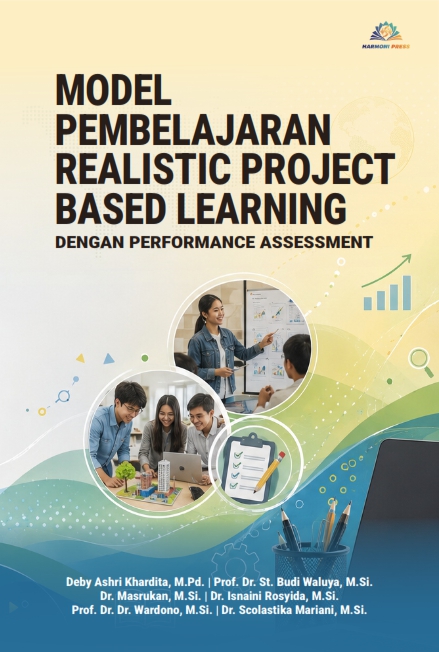
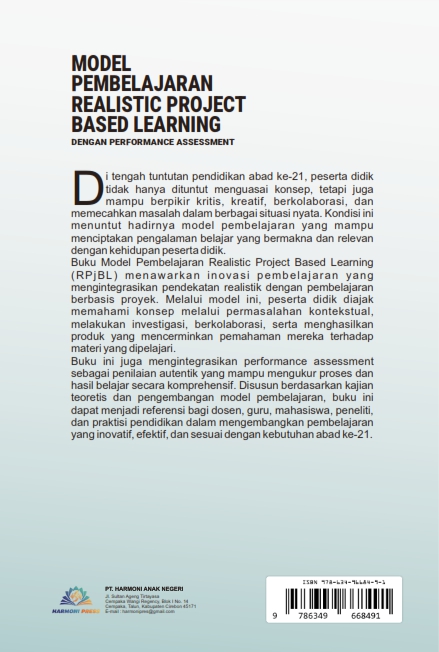
Buku Pembelajaran Inovatif di Era Digital merupakan panduan komprehensif yang membahas berbagai pendekatan dan strategi pembelajaran yang relevan dengan perkembangan teknologi dan tuntutan abad ke-21. Buku ini dirancang untuk membantu para pendidik menciptakan proses pembelajaran yang aktif, kreatif, kolaboratif, dan bermakna melalui penerapan metode yang inovatif serta pemanfaatan teknologi digital secara efektif. Isi buku ini mencakup pembahasan tentang konsep, prinsip, unsur, serta karakteristik pembelajaran inovatif yang berorientasi pada peserta didik. Berbagai model pembelajaran disajikan secara sistematis, seperti small-group discussion, role-play, discovery learning, cooperative learning, project-based learning, problem-based learning, flipped classroom, blended learning, hingga gamification. Setiap model dilengkapi dengan penjelasan teoritis, langkah penerapan, serta contoh konkret yang dapat diterapkan dalam konteks pembelajaran masa kini. Selain menawarkan wawasan konseptual, buku ini juga menyoroti tantangan dan solusi dalam penerapan teknologi informasi dan komunikasi (TIK) di dunia pendidikan. Pembelajaran inovatif dipandang bukan sekadar sebagai metode, melainkan sebagai paradigma baru yang menuntut pendidik untuk berperan sebagai fasilitator dan pembimbing dalam menciptakan suasana belajar yang interaktif dan reflektif. Buku ini sangat relevan bagi guru, dosen, maupun praktisi pendidikan yang ingin mengembangkan pembelajaran berbasis teknologi dan nilai-nilai kreativitas, sekaligus mempersiapkan peserta didik agar mampu beradaptasi dan berdaya saing di era digital yang terus berkembang.
FROM THEORY TO PRACTICE: A Hands-On Guide in English Language Teaching

FROM THEORY TO PRACTICE: A Hands-On Guide in English Language Teaching

This book is a comprehensive resource that bridges the gap between linguistic theory and classroom application. This collaborative work brings together the insights of emerging educators and scholars who explore how established learning theories can be effectively transformed into dynamic English Language Teaching practices. The book presents a collection of chapters, each focusing on a different pedagogical foundation from behaviorism, innatism, and cognitivism to communicative language teaching, Vygotskian theory, post-method pedagogy, Krashen’s second language acquisition, and connectivism. Each theory is discussed through an accessible structure that combines conceptual explanations, classroom implications, and detailed lesson plan examples. This dual emphasis allows readers not only to understand the philosophical roots of each approach but also to visualize how they can be implemented in real teaching scenarios. What distinguishes this book is its balanced approach: it neither confines itself to theory nor oversimplifies practice. Instead, it integrates both, guiding teachers to make informed decisions that are adaptable to diverse learner needs and institutional contexts. Readers will find practical strategies for fostering communicative competence, reducing learner anxiety, integrating technology, and designing meaningful learning experiences that promote interaction, reflection, and autonomy. Ultimately, this book emphasizes that effective English teaching is an ongoing dialogue between theory and practice—one that empowers teachers to transform principles into purposeful pedagogy and learners into confident, competent communicators in a global context.