ENGLISH FOR ICT STUDENTS
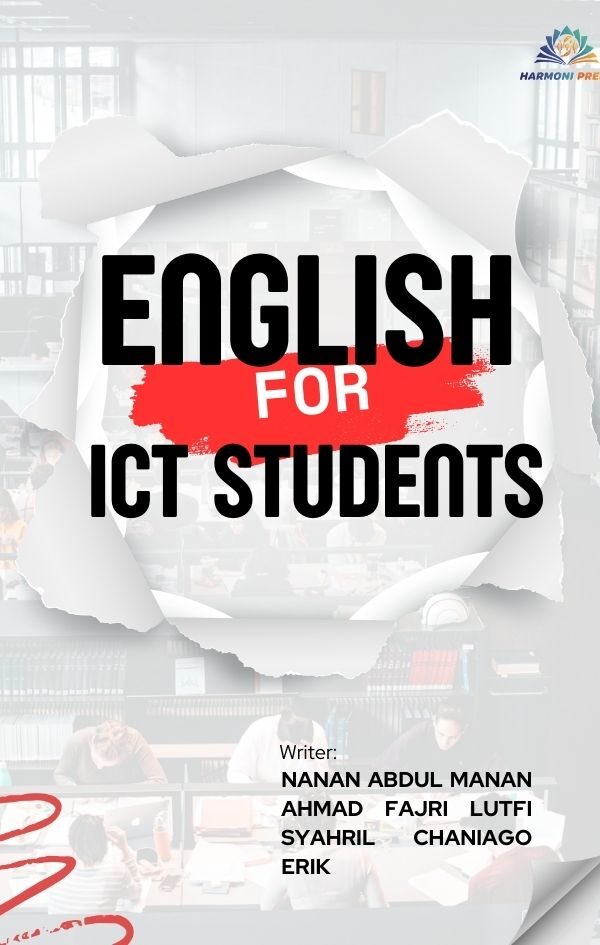
English for ICT Students is a practical and context-based English learning book specifically designed to meet the academic and professional communication needs of students in the field of Information and Communication Technology (ICT). In an era where technology-driven collaboration transcends national and disciplinary boundaries, English proficiency has become a vital skill for ICT learners and future professionals.
This book integrates core language skills with authentic ICT-related contexts, such as digital self-introduction, job descriptions, professional email writing, hardware and software descriptions, technical problem reporting, manual reading, product presentations, and cybersecurity communication etiquette. The eight well-structured units guide learners progressively from basic digital communication to more advanced professional and technical interactions.
Each unit is carefully designed with clear learning objectives, relevant reading texts, grammar support tailored to ICT contexts, practical exercises, presentation tasks, and reflective activities. The materials emphasize clarity, accuracy, and professionalism, while also encouraging critical thinking, confidence, and adaptability in digital environments.
Intended for ICT students, lecturers, and ESP practitioners, English for ICT Students serves as a comprehensive learning resource that bridges language competence and technical expertise, preparing learners to communicate effectively and responsibly in academic, workplace, and global ICT settings.