Cart

PT. Harmoni Anak Negeri

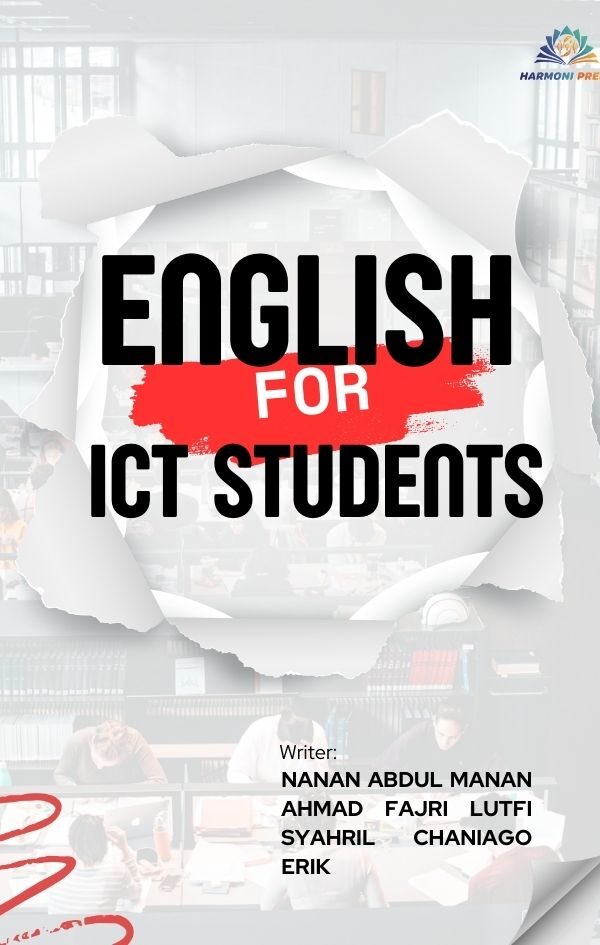
ENGLISH FOR ICT STUDENTS

ENGLISH FOR ICT STUDENTS

English for ICT Students is a practical and context-based English learning book specifically designed to meet the academic and professional communication needs of students in the field of Information and Communication Technology (ICT). In an era where technology-driven collaboration transcends national and disciplinary boundaries, English proficiency has become a vital skill for ICT learners and future professionals. This book integrates core language skills with authentic ICT-related contexts, such as digital self-introduction, job descriptions, professional email writing, hardware and software descriptions, technical problem reporting, manual reading, product presentations, and cybersecurity communication etiquette. The eight well-structured units guide learners progressively from basic digital communication to more advanced professional and technical interactions. Each unit is carefully designed with clear learning objectives, relevant reading texts, grammar support tailored to ICT contexts, practical exercises, presentation tasks, and reflective activities. The materials emphasize clarity, accuracy, and professionalism, while also encouraging critical thinking, confidence, and adaptability in digital environments. Intended for ICT students, lecturers, and ESP practitioners, English for ICT Students serves as a comprehensive learning resource that bridges language competence and technical expertise, preparing learners to communicate effectively and responsibly in academic, workplace, and global ICT settings.
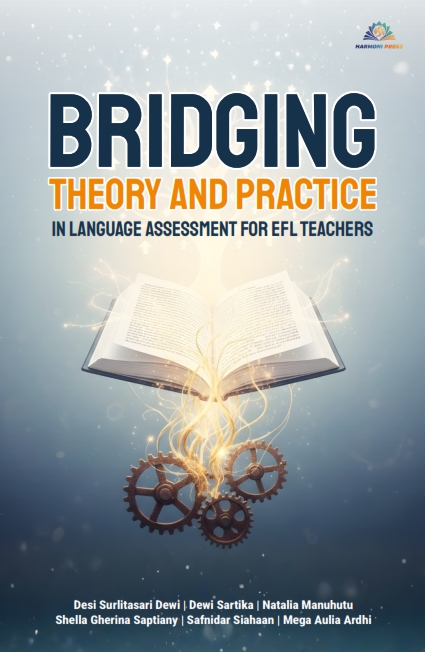
BRIDGING THEORY AND PRACTICE IN LANGUAGE ASSESSMENT FOR EFL TEACHERS

BRIDGING THEORY AND PRACTICE IN LANGUAGE ASSESSMENT FOR EFL TEACHERS

Language assessment is often perceived by preservice teachers as one of the most intimidating aspects of education, frequently treated as a detached technical requirement rather than a vital spark for learning. This comprehensive guide transforms that perception by offering a clear, practice-oriented pathway through the complexities of evaluating language proficiency in EFL contexts. Grounded in established theories but driven by a hands-on, project-based learning approach, this book empowers educators to move beyond traditional testing. It provides a deep dive into core principles: validity, reliability, and authenticity, and demonstrates their direct application in assessing receptive and productive skills. From constructing effective multiple-choice items and designing nuanced analytical rubrics to conducting expert validation and basic item analysis, readers are guided through every stage of the assessment cycle. Designed specifically for undergraduate students and novice teachers, this text bridges the gap between abstract academic concepts and the daily realities of the classroom. By fostering assessment literacy and ethical responsibility, it prepares the next generation of educators to design evaluations that are not only fair and reliable but also powerful tools for improving instruction and inspiring student growth.
ENGLISH LANGUAGE TEACHING CURRICULUM AND MATERIALS DEVELOPMENT: Theory, Reform, and Practice in the Indonesian and Global Context

ENGLISH LANGUAGE TEACHING CURRICULUM AND MATERIALS DEVELOPMENT: Theory, Reform, and Practice in the Indonesian and Global Context

In an era of rapid globalization demanding adaptive English proficiency, how can curriculum and instructional materials be designed to remain deeply rooted in local identity? This book addresses that fundamental challenge by reconceptualizing English Language Teaching (ELT) curriculum and materials development not as a linear technical procedure, but as an integrated, context-responsive process. Across nine insightful chapters, the text explores the reciprocal relationship between the curriculum as a macro-level blueprint and materials as the micro-level resources that breathe life into educational goals within the classroom. By positioning teacher agency as the pivotal mediator, readers are invited to understand how global frameworks such as the CEFR B1 competencies and Task-Based learning can be harmoniously negotiated with the unique sociocultural realities of the Indonesian landscape. This volume offers a comprehensive guide, ranging from materials development principles grounded in Second Language Acquisition (SLA) theory to systematic frameworks for evaluating modern EFL textbooks. Featuring critical analysis of the Merdeka Belajar policy and the implementation of Outcomes-Based Education (OBE), this work serves as an essential reference for educators seeking to transform English teaching into an empowering, inclusive, and sustainable professional practice.