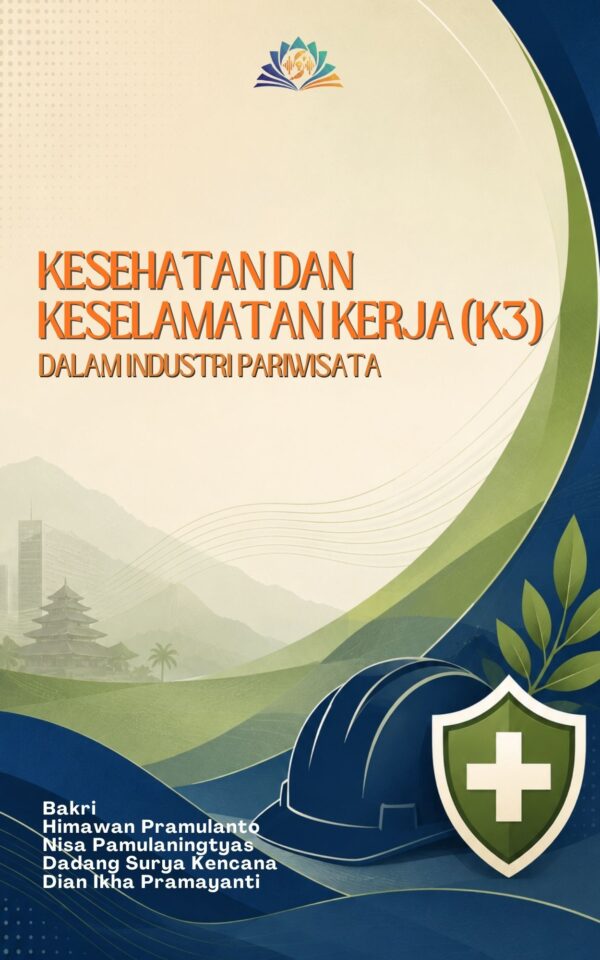
KESEHATAN DAN KESELAMATAN KERJA (K3) DALAM INDUSTRI PARIWISATA
Industri pariwisata menawarkan pengalaman, pelayanan, dan mobilitas yang tinggi, tetapi di balik aktivitas tersebut terdapat beragam risiko yang dapat mengancam keselamatan dan kesehatan pekerja maupun wisatawan. Buku Kesehatan dan Keselamatan Kerja (K3) dalam Industri Pariwisata hadir sebagai referensi untuk memahami, mencegah, dan mengendalikan berbagai risiko tersebut secara sistematis.
Buku ini membahas konsep dasar K3, ruang lingkup dan prinsip penerapannya, identifikasi bahaya, pengendalian risiko, penggunaan alat pelindung diri, kesehatan lingkungan kerja, hingga Sistem Manajemen Keselamatan dan Kesehatan Kerja (SMK3). Pembahasan diperluas pada karakteristik risiko di hotel, restoran, objek wisata, transportasi, aktivitas luar ruang, serta berbagai layanan pariwisata yang memiliki tantangan keselamatan berbeda.
Perspektif buku ini tidak hanya menempatkan K3 sebagai kewajiban administratif, tetapi sebagai bagian penting dari profesionalisme, kualitas layanan, produktivitas, reputasi, dan keberlanjutan destinasi. Aspek ergonomi, bahaya kimia dan biologis, keamanan pangan, kesehatan mental, kelelahan, kekerasan, kondisi cuaca, hingga kesiapsiagaan menghadapi keadaan darurat turut mendapatkan perhatian.
Dilengkapi pembahasan regulasi, standar, pelatihan, dan studi kasus kecelakaan di sektor pariwisata, buku ini relevan bagi mahasiswa, akademisi, praktisi, pengelola destinasi, pekerja pariwisata, dan pemangku kepentingan. Buku ini mengajak pembaca membangun budaya keselamatan yang konsisten agar industri pariwisata tumbuh aman, sehat, profesional, berdaya saing, dan berkelanjutan, serta mampu melindungi manusia dan aset secara berkelanjutan.